
A hands-on comparison of Adobe Express vs Google Workspace for filmmakers, exploring design, collaboration, and real-world workflow stress tests.
hello world!
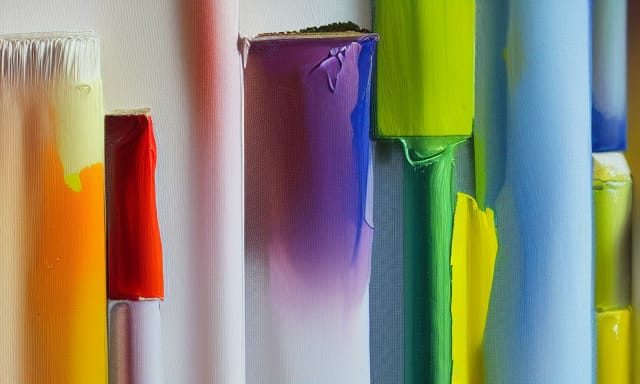
As a professional oil painter with over 15 years of experience, I've had the opportunity to work with a variety of oil paints. As someone who likes to experiment with new colors and techniques while keeping costs in mind, I often mix and match paint brands.
In this review, I'll share my recommendations for the top oil paint brands and tips for interpreting paint labels to help you make informed decisions when selecting your perfect oil paints.
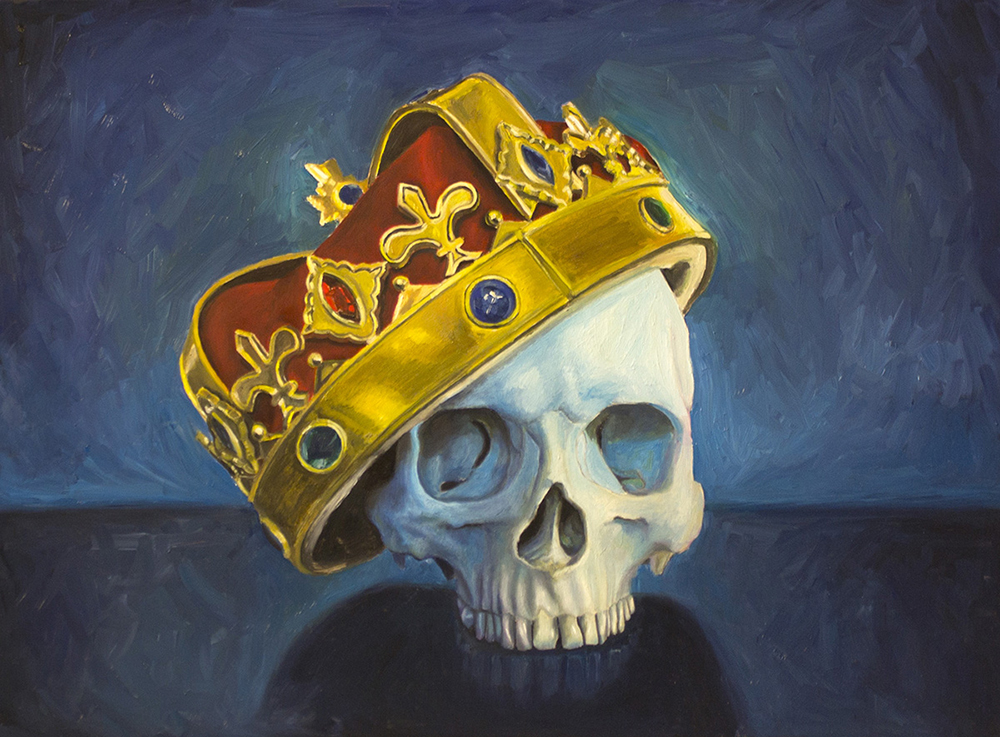
Notably, many other brands are not included on this list, like Sennelier or Michael Harding. While they are excellent brands, I was unsure if I'd call them the best at anything specifically.
Sennelier is an old-world-inspired paint that is known for its high pigment load, but I wouldn't call it the best old-world-inspired paint.
Rublev is the best to avoid - a unique spot on this list because I would not recommend it to anyone except I would definitely recommend it to professional art conservationists.
There is a science to pigments and oil paints. In the last 1000 years, oil paints have changed. Pigments have improved; we can buy premade tubes of perfectly mixed oil paints instead of mixing oil paints ourselves.
There are all sorts of new colors. Take the beautiful Cadmium Yellow and Cadmium Red; they would not exist without synthetic pigments.
Innovations continue to shape the painting field. So how do we determine which is the best oil paint?
I've encountered artists who are dedicated to using oil paints made in the traditional all-natural way, by hand-grinding minerals to produce the pigment.
Natural does not mean better; recall that hurricanes are natural.
When it comes to selecting high-quality oil paints, it's important to pay attention to the information provided on the labels. Here are some key elements you might find on the label, and what they mean.
Particle size is an important factor in determining the quality of oil paints, as it can impact the paint's intensity, opacity, lightfastness, transparency, and texture. While particle size is not always listed on paint labels, it is important when selecting oil paints.
Manufacturers typically offer paints with fine or extra-fine particle sizes. Both options can be good choices, but extra-fine particle size is considered to be superior, as it can result in a smoother, more consistent finish.
Also, particle sizes directly impact pigment load; smaller particles mean you're getting more pigment in your paints.
Particle size is important because it determines paint intensity, opacity, lightfastness, transparency, and texture, so it's one of the most critical factors.
Particle size is reported as a range or a mean, depending on the manufacturer. It's a measurement of the size of the pigment measured in microns.
Smaller particle size is usually better. Particle size also determines pigment load; smaller particles mean you get a higher concentration of paint. Both Fine and Extra Fine oil paints are of professional quality particle size. Extra Fine paints usually have the smallest particle size. Particle size also determines density, which means higher pigment concentration with a smaller particle size.
Different pigments can reach different particle sizes, so a direct comparison by particle size is not always reliable or easy to determine.
According to Natural Pigments, the manufacturer of Rublev, "The largest particles in modern colors are less than 44 microns..."
Rublev makes it a point to honor the old-world traditions; Rublev follows the traditions right before the old world learned that the inclusion of stabilizers prevents paints from separating in their tubes. Thus, Rublev's paints can separate in their tubes.
Because the paints are hand-ground, their particle size is up to 120 microns, which is the largest of any paint on this list by a long shot. You should be able to visually see some of the individual pigments. Rublev's oil paints are clunky and inconsistent and should be reserved for restoring 16th-century paintings.
Winton stands out for its ability to create textured oil paintings. Winton's controversial choice to include excessive driers, fillers, and stabilizers uniquely position this brand to create dense textures on various surfaces. They even have a dedicated medium for this purpose. This brand is fully synthetic, and the particle size is professional grade, below 25 microns. Because of driers and fillers your 'pigment load' might not be where you'd like it to be.
This hidden gem is one of my and other professional artists' favorite brands. This is an excellent workhorse paint with an average particle size of 7.5 microns. A smaller pigment size means you can fit more pigment in the tube. I could not find information to suggest that any brand produces a smaller particle size, including Holbein, BlockX, Sennelier, and Michael Harding.
The pigments used in Utrecht Artists' Colors are of the finest quality and are specifically formulated to provide extreme brilliance, transparency, and durability. One downside is that the materials used, however, it does not affect the paint quality, Utrecht's paints are consistent and smooth.
Gamblin Artist Oil Color's main feature is that they are pure color paints with old-world inspiration. Gamblin is a semi-affordable brand in the middle of the cost curve. Gamblin has a good selection of colors made from modern and traditional materials. In addition, they have no adulterants or fillers in the process, which means you'll get a pure color pigment each time.
Gamblin's advantage over brands like Sennelier or Michael Harding is that the founder Robert Gamblin understood the issues with old-world paints and took steps to perfect the old-world formulas. Thus Gamblin's old-world paints tend to be a higher quality than other brands.
If you really must paint with old-world-inspired paints, I recommend this brand over other brands because they take extra steps to produce high-quality old-world pigments.
Holbein Artist Oil Colors are the most excellent paint brand I have tested, renowned by professional artists worldwide.
Each pigment has individual characteristics. Mineral-based Burnt Sienna has different physical characteristics than lab-created Cadmium Red. Due to each pigment's unique opacity, texture, and particle size, no one-size-fits-all ratio of pigment to oil works for every color profile.
Holbein creates paint for the sake of paint. Holbein can achieve the best consistency for the specific pigment by using a mixture of substances depending on the color's needs; they do not cut corners or sacrifice paint quality to follow specific dogmas. Extra-fine paints are milled to the most petite particle sizes, which means you also get an extremely high pigment load with each paint tube.
Generally, natural pigments have larger pigment sizes, less tinting strength, and worse lightfastness than modern synthetic pigments.
Natural pigments are derived from naturally occurring substances like living organisms and minerals. Here are some examples of what natural pigments are made of:
A natural pigment can produce some very unique colors and textures. Van Dyke Brown is an essential color in my palette. Its tinting strength is weak enough that it mixes with flesh tones in just the right way. All-natural Van Dyke Brown was originally made from Scuttlefish ink. Today most manufacturers make it out of minerals or what they call synthetic organic pigments - which is just a fancy way of saying synthetic.
05 - Rublev Colours Artists Oils
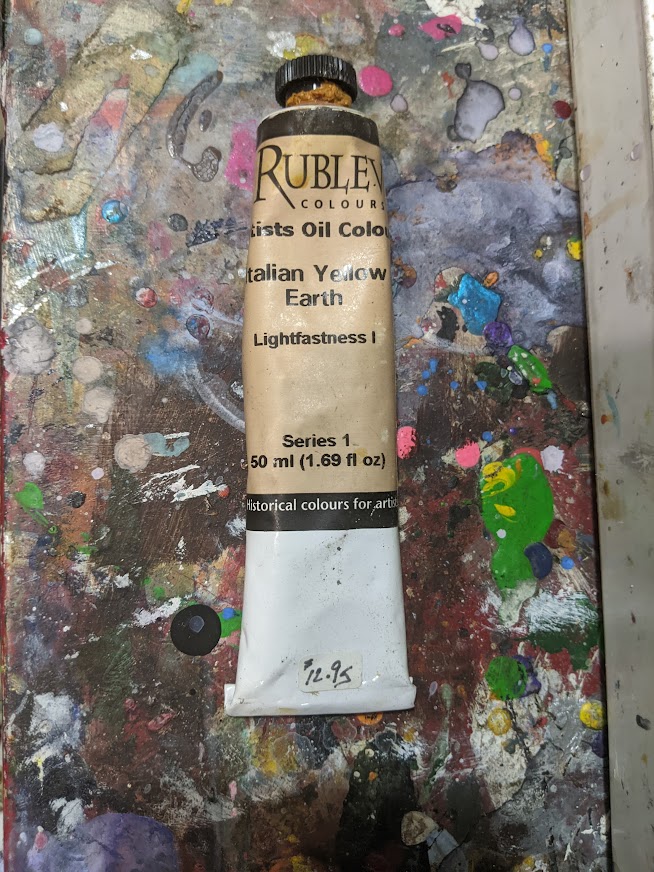
Summary - Best for old-world art restoration
An expensive paint that exemplifies why it's ok to use stabilizers, fillers, and driers. Rublev is a living example of why we no longer make color the same way they did 300 years ago. When I used Rublev's Burnt Sienna, it felt precisely the same as painting with dirt.
You never know what you will get with Rublev; each oil color has a unique texture and a different pigment size. After a long enough time, my Burnt Sienna separated in the tube because Rublev made it a point not to include stabilizers - stabilizers are specifically designed to prevent paints from separating. This paint brand is best for conservationists who are restoring an ancient painting.
Rublev is the only brand I've found that tries its hardest to make paints the same way they made 300 years ago, which is a plus for many artists. You won't find anything synthetic in this brand.
Rublev makes paints the same way they made them 300 years ago. That sounds like a plus.
I tested Rublev's Burnt Sienna. The texture was clunky; the opacity was thick in some places and thin in others. In many ways, painting with Rublev's Burnt Sienna was like trying to paint with dirt. Then I remembered that Burnt Sienna was initially made from kiln-dried dirt scooped up from the ground in Sienna, Italy.
When sienna earth is calcined (roasted) at high temperatures, it loses its water content (hydration) and becomes burnt sienna.
From Rublev's website
Thankfully, innovation resulted in new paints that have the same color but might not have the same texture. There are chemical reasons why Burnt Sienna is red, due to the limonite iron oxide content in the dirt; now that we understand that, there is no need to make Burnet Sienna out of dirt anymore.
Rublev advertises that natural pigments are at least six times the diameter of most synthetic pigments in modern artists’ colors.
Larger particle size is not a good thing. Recall that a larger particle size results in less intensity, weaker opacity, lower lightfastness, less tinting strength, and a rougher texture.
The sales pamphlet provided by the Society of Figurative Arts states that Rublev's consistency and texture "Varies for each pigment...... every pigment has individual characteristics." Again, not necessarily a good thing; I like to focus on painting and not deal with issues that come from clunky paints.
Rublev makes it a point to honor old-world traditions, notably before the old-world learned that oil paints would separate in the tubes without stabilizers. Rublev is in the camp that artists' oil colors should have nothing but pigments and oil in the paints.
Rublev Colours Artists Oils do not contain additives, such as fillers, driers, and stabilizers—simply pigment and oil. We use linseed oil in our paint sometimes with a small amount of heat-bodied linseed oil.
Rublev
In my opinion, Rublev's Burnt Sienna is a prime example of why it's okay for paints to have fillers, driers, and stabilizers.
Modern science and technology have brought us many synthetic pigments, which can be durable, cheaper, and more brilliant than their natural counterparts. Partly because of particle size and partly because synthetic colors are more vibrant.
All the bright-colored cadmium paints are made from synthetic pigments.
Synthetic pigments are most commonly produced from chemical processes that involve aluminum, cadmium, chromium, cobalt, copper, iron, manganese, nickel, zinc, titanium, and calcium.
Very bright warm colors like Cadmium Red, which are now essential parts of an artist's toolkit, are not naturally occurring.
Colors made with synthetic pigments:
There are "hue" versions of many synthetic paints that are often more economical and less toxic. If the paint is dangerously toxic, it will say so on the label. Flake White, a lead-based paint, is the most famous example of a toxic paint that is still sold in stores.
Read your labels!
04 - Winton Oil Colour
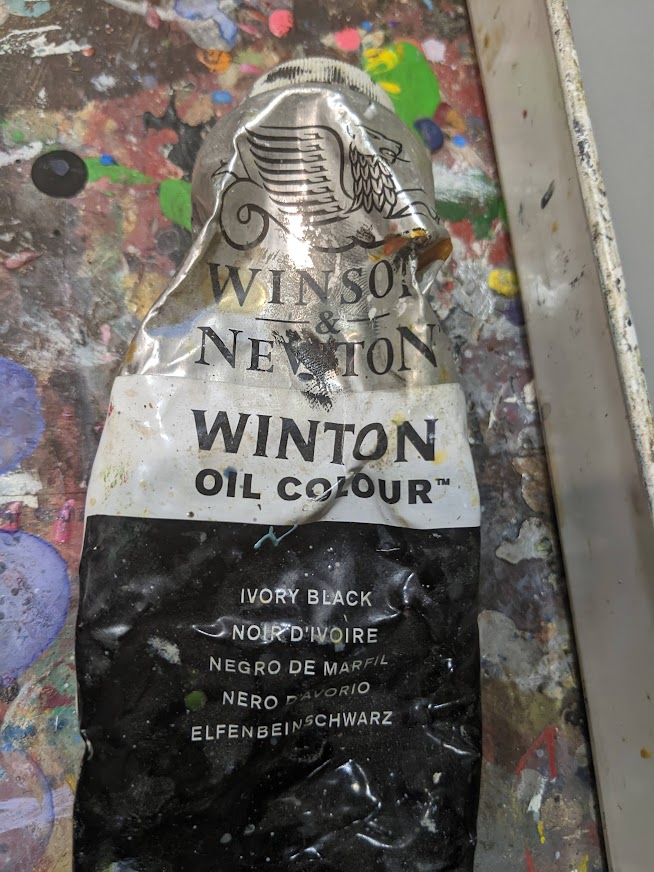
Summary - Best for impasto
Synthetic paints can reach smaller pigment sizes than natural pigments. Winton has an average pigment size of 25 microns, the upper limit of paints in the professional grade section. Winton's tinting strength, opacity, and lightfastness benefit from being fully synthetic.
However, Winton fills their colors with excessive fillers, driers, and stabilizers. While a negative for many artists, it can be a positive for other artists. Fillers, driers, and stabilizers allow Winton paints to produce some exciting impasto effects. In addition, the fillers will enable you to build up thick surfaces quickly.
That is a benefit you'd have to weigh.
When I started painting with oils 15 years ago, I almost exclusively used Winton Oil Colour from Windsor and Newton. I remember buying the giant 200ml tubes to save on costs. I recall living off of $300 per paycheck.
The Winton brand was there for me during hard times. I don't remember having any issues with the brand. It was reliable and helped me learn how to paint. It's also available everywhere they sell oil paints.
Nowadays, I rarely find myself using more than a pea-size of oil paint at a time. So trying to save money by buying giant tubes of cheap paint doesn't sound as good anymore.
Winton's paint is consistent and smooth. It comes out of the tube with a buttery texture. The opacity is consistent across colors, except for select colors like Alizarin Crimson, which is very transparent.
Winton has an average particle size of fewer than 25 microns and falls within the high end of the professional-grade pigment size. Comparably, some colors in the Rublev brand ranged from 10-120 micrometers.
While recently using it to paint the background of a portrait, the thick buttery titanium white added a few millimeters of depth to the painting surface. Some artists live for impasto. Winton might be your brand if you need to preserve texture.
However, why buy Winton when there are indisputably better brands at around the same cost?
03. Utrecht Artists' Colors

Summary - The best budget oil paint
Utrecht is an excellent budget brand of paint for professionals. Their pigment load, texture, consistency, and value for the money are hard to beat, even in the upper echelons of professional-grade pigment.
Utrecht's downside is that some, but not all, of its colors are not made with the same materials as a brand like Holbein or Sennelier. Utrecht also has fewer colors than the other brands on this list.
Utrecht is comparable in price to Winton but better in quality and particle size. I use Utrecht for my underpainting and more expensive paints for the top layers.
Utrecht is a Brooklyn Manufacturer founded in 1949. Dick Blick aquired Utrecht in 2013.
Utrecht's paints are pretty buttery and consistent across colors.
Utrecht, like Holbein and Sennelier, adds the highest possible concentration of pigments. Utrecht, by comparison, is much more affordable.
The pigments used in every Utrecht Artists' Colors are of the finest quality and are specifically formulated to provide extreme brilliance, transparency, and durability. It is also among the most popular oil paints available in the market. In addition, the paints are not prone to cracking and are moist for an extended period.
In Utrecht Artists' Colors, you'd find:
Although Utrecht offers only 77 colors, its Artists' Colors line still provides a good range of options for artists.
Interestingly, Utrecht's pigment size is one of the smallest in the professional-grade oil paint industry, with particles ground to just 7.5 micrometers. It's surprising that the company does not more prominently advertise this fact.
Extra fine paints usually range from 11-44 micrometers.
02. Gamblin Artist Oil Colors
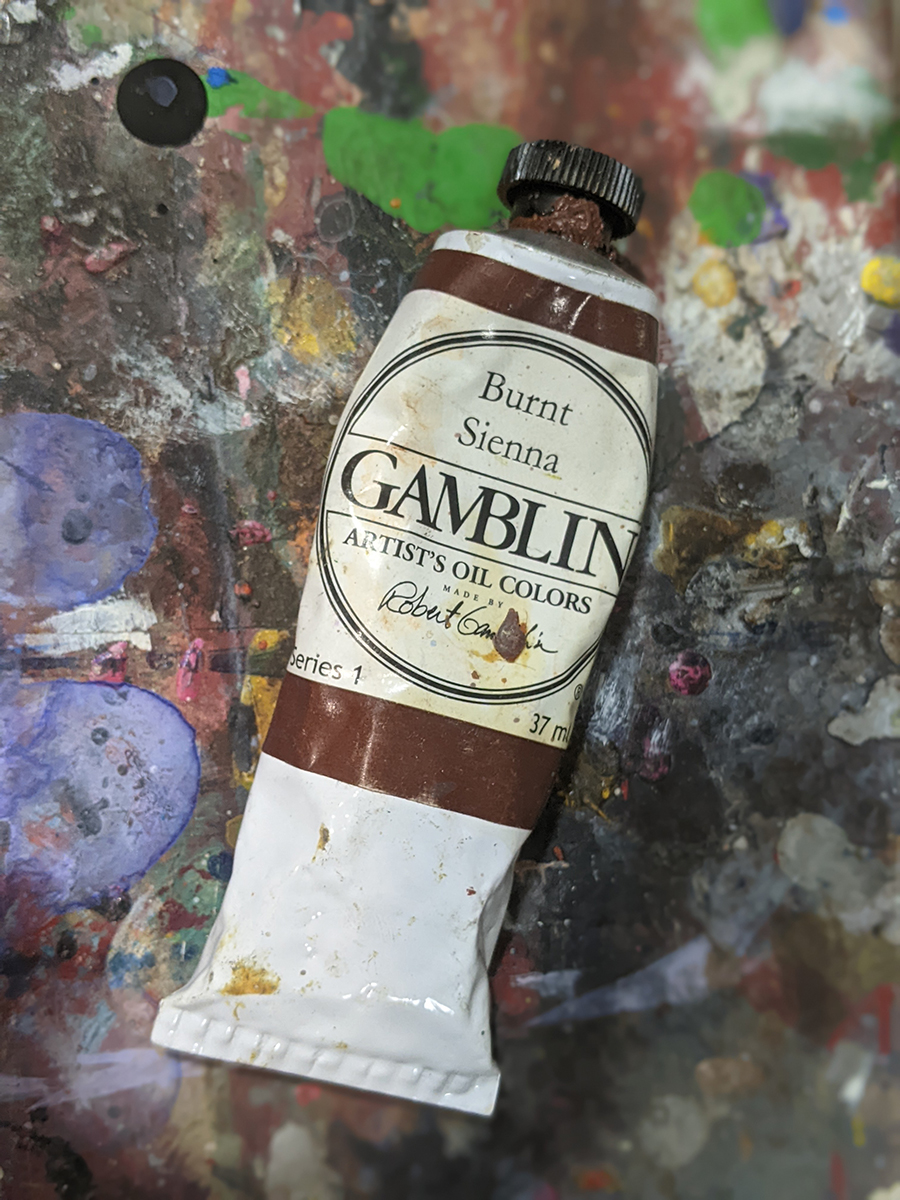
Summary - The best old-world paint
While Holbein extols the virtues of the pigments based on their individual needs, Gamblin Artist Oil Color's main feature is pure pigment paints with old-world inspiration.
Honoring old-world traditions also means a larger pigment size, lower tinting strength, and sometimes a quirky texture. Finding that perfect balance between honoring old traditions and making excellent paint is challenging. Other brands like Rublev celebrate old-world traditions so far to the extreme that their paint quality suffers. That being said, Gamblin is by far the best old-world-inspired paint.
Gamblin Artist Oil Colours are affordable enough to use as a workhorse paint, plus you'll get a wide selection of the best modern and traditional colors.
Most painters know of Gamblin through Gamsol, the odorless mineral spirit.
Gamblin Artist's Oil Colors are another top brand and a very well-respected one in the industry. Like other premium-level professional paints, Gamblin has a very high pigment load.
The pigments used in Gamblin Artist's Oil Colors are of the finest quality and formulated to provide extreme brilliance, transparency, and durability. In addition, Gamblin Artist's Oil Colors are not prone to cracking because they are wet for an extended period.
In addition, their colors are grouped into mineral and modern colors.
Gamblin has a nice consistency between colors. However, some colors have more character than others.
Notably, Gamblin honors some old-world traditions, and some of their colors are made the same way they were made hundreds of years ago but with a twist.
Gamblin doesn't produce subpar paints for the sake of art history; they refine the old formulas and produce something usable that still honors the old world.
Robert Gamblin formulated a contemporary version of Asphaltum that is true to its historic working properties but, unlike traditional formulations, is both lightfast and permanent.
Gamblin
Gamblin Artist Oil Color's main feature is that they are pure color paints with old-world inspiration. In addition, they have no adulterants in the process, which means you'll get a pure color pigment each time.
Gamblin paints also come with different tinting strengths, undertones, and textures, depending on the pigment.
In the Gamblin Artist's Oil Colors line, you'd find:
One note, Gamblin colors are "Fine," while brands like Holbein are "Extra-Fine." Fine and Extra-Fine denote the visual particle size, the total milling time, and due to particle size, overall density.
You can go crazy trying to find info on particle sizes. Just know that particle size doesn't matter as much at some point.
Gamblin colors are milled less fine than other brands, such as Blockx, Holbein, Sennelier, and Rembrandt. As a result, some of Gamblin's colors have what some people call a "slight grit" on the brush.
I have used Gamblin for over ten years and noted a few odd textures but not enough to stop using the brand.
According to Gamblin, "Mineral-based pigments have larger pigment sizes and lower tinting strengths than modern colors."
What I like about the Gamblin line is that they have many color and texture options, the old ways inspire them, but it isn't their mission.
With 90 colors, the range of available colors includes a full palette of colors with the addition of a few unique colors. So it has all the colors that you need to create your masterpiece.
01. Holbein Artist Oil Color

Summary - The best oil paint brand in the world
While pricier than the other paints on this list, Holbein offers excellent value for the money. Some brands cost more and are not nearly as refined as Holbein.
In some of Holbein's paints, like Misty Blue, you can visually see a ridiculously high pigment load yet not feel it on the brush. I use this brand as the topmost layer of my paintings, and some of the colors in this line, such as Ivory White and Flake White, are notoriously irreplaceable.
Holbein has the added benefit of being such an old brand that they've had the time to refine the lids on their paint tubes. Their lids are known in the art world for longevity; their paints do not separate in the tubes; I have Holbein paints that are approaching a decade in age and are functioning like new.
Holbein is a Japanese brand founded in 1908.
Professional artists swear by the brand.
Manufacturers fall into two camps regarding the ingredients in their paints. The first camp extols the virtues of using only pigment and oil, claiming that all other chemicals are unnecessary and add cost. The opposing camp disagrees with this, stating that each pigment requires specific chemical components to achieve the best results. Holbein is a member of the second group.
With 167 colors, Holbein Artist Oil Color has an extensive collection. Ivory White and Misty Blue are two of my favorite colors from Holbein.
Holbein's Extra-Fine pigment mixture is tuned with various oils, binders, driers, and stabilizers for maximum compatibility. The consistency is good right out of the tube and onto the brush.
Each pigment is made for the sake of the pigment, and to maximize the efficacy and textures of the paint, Holbein adds whatever is needed to extol the virtues of the individual pigment.
Holbein Artist Oil Color's come in various forms and doesn't exclusively use Linseed oil. Holbein can achieve the best consistency for the specific pigment by using a mixture of substances depending on the color's needs.
In the Holbein line, you’d find
Holbein's mills are currently run by computers, producing one of the smallest pigment particles.
The standard particle range for a professional-grade pigment is 11-44 micrometers. For comparison, some colors in the Rublev brand mentioned earlier are as large as 10-120 micrometers.
Holbein Vernet mills their pigments to 11-25 micrometers, 50% smaller than the average 11-44 micrometers, improving tinting and vibrancy.
Note: The pigment size is only one factor that makes good paint. Holbein goes to great lengths to create ‘perfect’ oil paints. Holbein Artist Oil Color is arguably the best oil paint in the world. Read the Holbein oil paint review.
While no single brand can meet every artist's needs or have all the color choices one might desire, selecting a few brands is a great way to get a versatile range of colors and textures. As an experienced oil painter, I have found that using a combination of Utrecht, Gamblin, and Holbein oil paints gives me the best results for my artwork.
Utrecht is known for its excellent quality and affordability, and its Artists' Colors line has a good variety of colors to choose from. Utrecht oil paints are made using high-quality pigments ground to 7.5 micrometers, making their pigment size one of the smallest in the professional-grade oil paint industry. This results in a smooth, consistent paint that is easy to work with and produces beautiful results.
Gamblin is another brand I recommend. Their oil paints are known for their consistency and excellent pigment load, resulting in bright and vibrant colors. Gamblin also offers a wide range of mediums and varnishes that can be used to customize the paint's texture, drying time, and sheen. Gamblin is also committed to producing eco-friendly products, which is a big plus.
Finally, Holbein is a brand that is popular among professional artists for its high pigment load, which provides rich and vibrant colors that last. Holbein is known for its excellent lightfastness, meaning that the colors will not fade over time. They offer a wide range of colors, including unique and unusual shades that are hard to find in other brands. Holbein oil paints are also made using high-quality pigments and are ground to extra-fine particle size, resulting in a smooth and consistent paint that is easy to work with.
By using a combination of Utrecht, Gamblin, and Holbein oil paints, artists of all skill levels can create beautiful, high-quality artwork with a versatile range of colors and textures.
Holbein is the best oil paint in the world. Each pigment is made for the sake of the pigment, and to maximize the efficacy and textures of the paint, Holbein adds whatever is needed to extol the virtues of the individual pigment.
Some oil paint manufacturers prefer to use hand-ground pigments or all-natural ingredients, which only adds cost.
It is best to read the label of the oil paint. If the paint is toxic, it will say so by law.
Oil paint is often made of pigments, an oil base, and other substances like calcium carbonate, which help stabilize the color mixture.
Oil paints are a type of paint. The paint is made from oil and pigment. Flemish painters in the 1500s invented oil paints.
At no extra cost to you, reviewers and secret shoppers may earn an affiliate commission from links on this site. Read more about our editorial policies. Interested in working with us? Email solutions@comprable.com
A hands-on comparison of Adobe Express vs Google Workspace for filmmakers, exploring design, collaboration, and real-world workflow stress tests.
A hands-on 2026 comparison of Adobe Express vs Canva for filmmakers. We stress-test both platforms across pitch decks, teaser trailers, lower thirds, thumbnails, and festival one-sheets to see which tool actually holds up in a professional workflow.
Top AI consulting firms compared by delivery model, focus area, and build capability. A practical guide for enterprise leaders.
I’ve read 85 books this year, and this list is my top 10 books of the year. P.S. All these are 5/5 stars
From e-commerce and gaming to automotive and care products, discover why Wix stands out as a versatile, fast, and cost-effective platform.
Based on millions of websites, GoDaddy is the fastest website builder with the highest Lighthouse scores of 70/100, Wix secured second with 62/100.
A hands-on comparison of Adobe Express vs Google Workspace for filmmakers, exploring design, collaboration, and real-world workflow stress tests.
A hands-on 2026 comparison of Adobe Express vs Canva for filmmakers. We stress-test both platforms across pitch decks, teaser trailers, lower thirds, thumbnails, and festival one-sheets to see which tool actually holds up in a professional workflow.
Top AI consulting firms compared by delivery model, focus area, and build capability. A practical guide for enterprise leaders.

Comprable is a source of product reviews, comparing prices and features for you.
Product reviews are generated by fellow shoppers like you.